
Most homeowners with dogs face the same problem: a patchy, yellowed lawn littered with waste. Your dog needs to go somewhere, but designating your entire yard as a bathroom isn’t sustainable for your grass, or your sanity. The good news? A dedicated dog potty area solves this headache. By creating a designated zone, you contain the mess, make cleanup easier, train your dog more effectively, and protect the rest of your lawn. Whether you prefer artificial turf, gravel, or a DIY potty box, there’s a solution that fits your space and lifestyle. Let’s explore the smartest <a href="https://winterparkresot.com/backyard-patio/”>backyard dog potty area ideas that actually work.
Table of Contents
ToggleKey Takeaways
- A dedicated backyard dog potty area solves lawn damage, simplifies cleanup, and enables faster training by containing waste to one designated zone.
- Artificial turf is a durable, low-maintenance backyard dog potty area solution that drains urine effectively and pays for itself within 3–5 years compared to constant grass repair.
- Gravel and mulch potty zones are budget-friendly alternatives that cost under $100 to install, though they require yearly material replacement and may be tracked throughout your yard.
- DIY potty boxes built from wood frames or purchased pre-made plastic versions work well for small yards and apartments, with raised designs keeping mess off your main lawn.
- Consistent training using routine bathroom times, verbal cues, positive reinforcement, and enzymatic cleaners on old accident spots will teach your dog to reliably use the designated potty area within 2–4 weeks.
- Weekly rinsing, regular waste removal, and quarterly inspections of your potty zone prevent odor buildup and ensure long-term durability of whichever material you choose.
Dedicated Potty Zones: Containing the Mess
Artificial Turf Solutions
Artificial turf is the low-maintenance favorite for dog potty areas. It drains quickly, doesn’t get muddy, and handles urine and waste without the wear-and-tear that real grass takes. Pet-specific artificial turf is engineered with stronger fibers and better drainage systems than standard landscape turf.
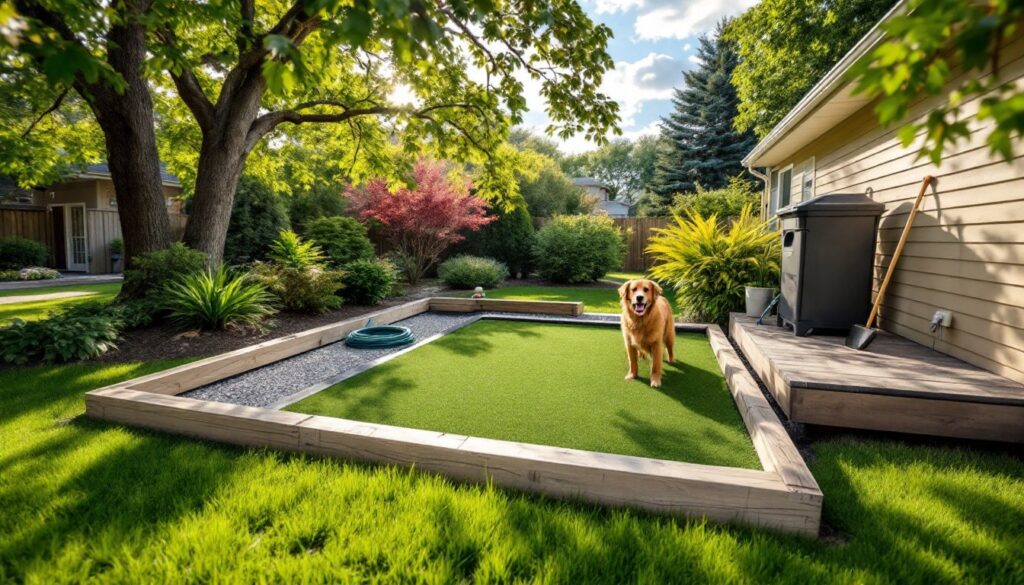
To install artificial turf, start by excavating the area to about 4–6 inches deep. Lay a sturdy landscape fabric on the base, then add perforated drainage pipe underneath if you’re concerned about pooling liquid. Top it with crushed stone or recycled rubber base material (about 2–3 inches) to support the turf and aid drainage. The turf itself typically comes in rolls or tiles: edges should be secured with landscape spikes or buried and staked down around the perimeter.
One major advantage: urine drains right through instead of pooling on top. Weekly rinses with a garden hose keep it fresh. The upfront cost runs $500–$2,000+ depending on area size, but there’s no mowing, reseeding, or brown patch recovery. Real grass requires constant repair, so artificial turf pays for itself over 3–5 years.
Gravel or Mulch Areas
Gravel and mulch potty zones are the budget-friendly, easy-to-refresh option. Both allow excellent drainage, and you can replace the top layer annually or as needed. Pea gravel (smooth, small stones) and marble chips are gentler on paws than jagged rock. Wood mulch absorbs odor better than gravel but breaks down faster and needs more frequent replacement.
Layout is straightforward: edge the area with landscape borders or timber frames (typically 2×6 or 2×8 boards), remove grass and topsoil, lay down landscape fabric to prevent weeds, then fill with 2–4 inches of your chosen material. Gravel is cheap, often under $100 for a small zone, and you can expand or shrink the area easily.
The catch: gravel gets tracked everywhere, and some dogs object to the feel on their paws. Mulch compacts over time and smells like wet dog if not rinsed occasionally. Both need weeding and material top-ups yearly. If you live in a wet climate, drainage becomes critical: standing water turns mulch into a mosquito breeding ground. Backyard Makeovers: Transform Your Space naturally incorporates these functional zones into your overall outdoor design.
DIY Potty Box Ideas for Easy Maintenance
A potty box is a contained, box-like structure that holds either artificial turf, pee pads, or washable litter-style materials. It’s perfect for smaller yards, townhouses, or dogs that need visual boundaries to understand where they should go.
The simplest DIY potty box uses a wooden frame (built from 2×10 boards) attached to a plywood base. Seal the wood with a pet-safe exterior stain to prevent rot. Drill drainage holes in the plywood base, then layer it as you would with a ground-level potty area: landscape fabric, gravel, and turf or pads. Size depends on your dog: a 3×4-foot box works for most dogs, though larger breeds might need 4×6 feet.
Alternatively, you can buy pre-made plastic raised potty boxes (sold online and at big-box retailers). They typically accept standard pee pads or small amounts of synthetic turf. The advantage is zero DIY skill needed, just place it, add pads, and swap them out. Cost runs $50–$200, but pads are consumables (roughly $30–$50 per month for daily use).
Raised boxes keep the potty zone off your main lawn entirely and are especially useful for apartments with balconies or small patios. Cleanup is fast: pull out the old pad, rinse with a hose, and install a fresh one. The trade-off is ongoing pad costs. For budget-conscious DIYers, a wooden box lined with washable artificial potty pads (reusable, rubber-backed) cuts long-term expenses to under $100 annually.
Natural Alternatives That Work With Your Landscape
If you prefer a solution that blends seamlessly into your yard aesthetic, consider semi-natural materials. Composite decking or rubber mulch splits the difference between durability and natural appeal. Rubber mulch is made from recycled tires, drains excellently, doesn’t compact, and lasts 8–10 years. Composite decking in a designated corner creates a clean, defined zone without needing a frame.
Another underrated option is sand, specifically, builder’s sand or play sand. Dogs naturally prefer sandy areas for waste, so they often take to it immediately. It drains fast, rinses clean with water, and costs $20–$40 per cubic yard. The downside: sand gets everywhere, into cars and the house, and it must be completely replaced every 2–3 years.
For a truly low-impact approach, designate a shaded area of your yard with hardy ground cover like sedge or clover instead of grass. These plants handle dog urine better than traditional lawn grass and don’t need the same fertilizer inputs. But, this requires establishing the cover first (spring or fall planting) and won’t fully eliminate yellow patches, it just reduces them. Transform Your Space: Inspiring Backyard Makeover Ideas provides strategies for integrating functional zones into cohesive landscape designs.
Training Your Dog to Use the Designated Area
Even the best potty zone won’t work if your dog doesn’t use it. Training starts with establishing routine. Take your dog to the designated area first thing in the morning, after meals, before bed, and after playtime. Use a consistent verbal cue like “go potty” or “do your business.” When they go in the right spot, immediately praise and treat (use high-value treats, chicken, cheese, or whatever motivates your dog).
Inside, use enzymatic cleaners on previous accident spots elsewhere in the yard: regular cleaners don’t fully break down urine, and dogs return to smell-marked areas. Confine your dog to the potty zone during the training period, don’t give them the whole yard until they’re reliable. Most dogs catch on within 2–4 weeks with consistent reinforcement.
For stubborn dogs or those with deep habits, scent marking helps. Place soiled pee pads or feces in the new zone initially: the familiar scent encourages your dog to use that spot. Once they’re going reliably, phase out the scent markers.
Older dogs or those with medical issues may need gentler reinforcement. Consult your vet if your dog suddenly stops using the designated area, UTIs, digestive issues, or anxiety can trigger regression. Never punish accidents: it creates fear and confusion. Patience and positive reinforcement always outperform punishment-based training.
Maintenance Tips to Keep Your Potty Zone Fresh
Daily maintenance prevents odor and keeps your dog’s area hygienic. For artificial turf or gravel zones, remove solid waste immediately, most people use a pooper scooper and sealed waste bag. Rinse the area weekly with a garden hose to flush away urine residue. If odor builds up (usually after 3–4 weeks), a pet-safe enzyme spray breaks down uric acid that regular water won’t touch. Products based on bacillus or enzyme cultures work without harmful chemicals.
For mulch or sand, turn the top layer monthly with a rake to break up compacted waste and improve aeration. Replace mulch entirely every 12–18 months: sand every 2–3 years. Both materials benefit from a rinse-out before replacement.
If you’re using pee pads in a potty box, daily pad swaps are non-negotiable. Leaving soiled pads creates stench and bacterial growth. Weekly, wipe the box interior with a mild bleach solution (1 part bleach to 10 parts water) and let it dry completely before adding fresh pads.
For long-term durability, inspect your potty zone quarterly. Look for compacting, poor drainage (puddles forming), or edge erosion. Tighten landscape borders if they shift, top up gravel or mulch, and reseal wooden frames every 2–3 years. 10 Creative DIY Backyard Projects shows how small maintenance investments protect larger outdoor investments. Regular upkeep is far cheaper than replacing a neglected, degraded potty zone. Research from veterinary behaviorists (available via Hunker’s home improvement guides) confirms that designated potty zones reduce stress for both dog and owner when properly maintained.