
A detached garage isn’t just extra parking anymore, it’s one of the smartest investments a homeowner can make. Whether you need dedicated workshop space, additional storage, or a flex room for hobbies and side projects, a backyard detached garage adds real functionality and property value. As we move into 2026, detached garage designs are more versatile than ever, blending modern convenience with smart space planning. The key is knowing what’s possible before you break ground, so you build something that actually fits your life instead of becoming an expensive shed that collects cobwebs.
Table of Contents
ToggleKey Takeaways
- Backyard detached garage ideas maximize property value and functionality by combining vehicle storage with workshop, studio, or hobby space in one versatile structure.
- Vertical storage solutions like wall-mounted pegboards, overhead ceiling racks, and heavy-duty shelving transform wasted space into organized zones without requiring professional installation.
- A properly designed detached garage matches your home’s aesthetic through aligned roofing, siding, door styles, and landscaping to look intentional rather than like a utility afterthought.
- Building permits and licensed contractors for electrical, plumbing, and HVAC work are non-negotiable; skipping permits risks fines and home-selling complications.
- A solid foundation, strategic material choices, and DIY-friendly finishing options can reduce a detached garage project from $3,000–$7,000 for basic builds to well-planned renovations under $500 with epoxy sealing and storage updates.
- Define your exact needs upfront—extra parking, workshop, storage, or mixed-use space—before breaking ground to ensure your detached garage serves your lifestyle rather than becoming an expensive storage shed.
Modern Storage Solutions That Maximize Space
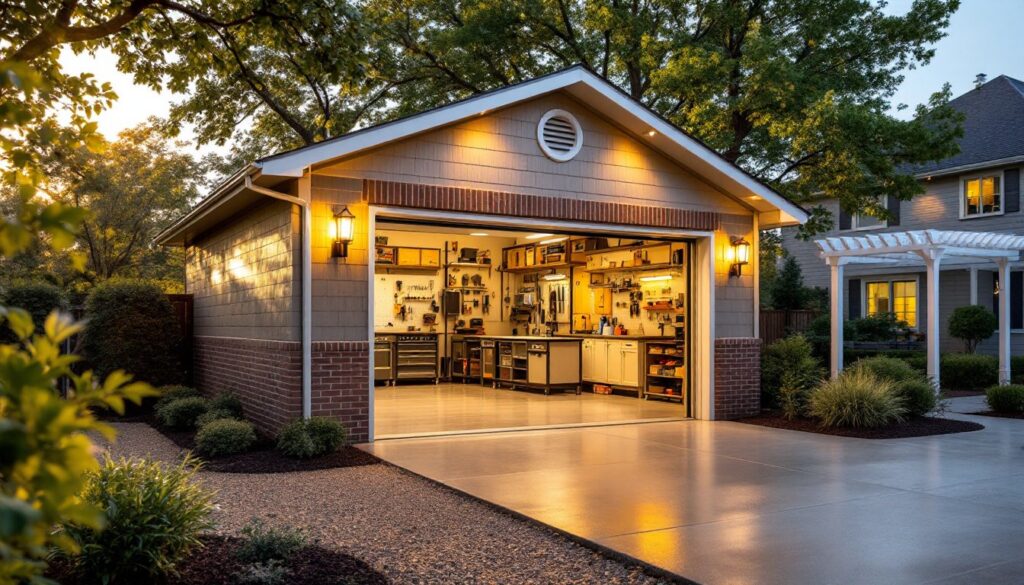
A detached garage is only useful if you can actually organize what goes inside it. Gone are the days of throwing everything on the floor and hoping it stays contained. Today’s garage storage uses wall systems, overhead racks, and modular shelving to turn wasted vertical space into actionable storage.
Wall-mounted pegboards are the workhorse of garage organization, cheap, customizable, and perfect for hand tools, electrical cords, and small power tools. Pair them with adjustable hooks and bins, and you can reorganize without reinvesting. Overhead ceiling racks ($150–$400) work especially well in garages with 12-foot ceilings or higher: they store seasonal items, luggage, and rarely-used sporting goods without taking up floor space.
For serious gear, heavy-duty shelving units (typically 5–7 feet tall, rated for 1,000+ pounds per shelf) keep items visible and accessible. Steel construction holds up better than wood in unheated garages where moisture and temperature swings are common. Dedicate zones: one corner for tools, another for sports equipment, one wall for cleaning supplies. This doesn’t require a contractor, just a Saturday afternoon and basic hardware.
Multi-Purpose Detached Garages for Today’s Lifestyle
The modern detached garage doesn’t have to be just a garage. Homeowners are getting creative: part vehicle storage, part hobby zone, part income stream. A garage with a finished section can serve double duty, three bays for cars or storage, one section framed and drywalled for a workshop, studio, or guest quarters.
Size matters here. A standard two-car garage is 20 feet by 20 feet (400 square feet). A three-car garage jumps to 30 feet by 20 feet (600 square feet). If you’re planning a mixed-use space, budget for at least 600 square feet so the garage doesn’t feel cramped when split between vehicles and living/working space.
Turn It Into a Home Workshop or Creative Studio
If you’re serious about woodworking, home repair, or creative projects, a dedicated workshop is worth every penny. A workshop section needs proper lighting (LED shop lights, minimum 50–75 lumens per square foot), electrical outlets every 6 feet along walls, and climate control if you work year-round. You’ll also want a sturdy workbench, a solid 4-foot-by-8-foot bench rated for 600+ pounds of tools and material is standard. Flooring matters too: epoxy or sealed concrete handles spills, is easy to clean, and is safer underfoot than raw concrete.
For a creative studio (photography, art, music), natural light is critical. Add operable windows (casement or slider styles) on the north and east walls to avoid harsh afternoon sun, and include blackout shades if you’re shooting photos or doing video work. Ventilation and humidity control prevent mold and keep supplies in good condition.
Design Aesthetics That Complement Your Home
Your detached garage should look intentional, not like an afterthought plopped in the backyard. The exterior should echo your home’s style, if your house is modern farmhouse, the garage should feel like a matching outbuilding, not a bunker.
Roofline and siding set the tone. Match the roof pitch and material (asphalt shingles, metal, composite) to your home. Siding should align too, if your house is brick, consider a brick accent on the garage, or match the trim color and material. Professional detached garage design emphasizes this harmony from the start.
Door and window choices matter more than you’d think. A carriage-style or glass-panel garage door ($800–$2,000) can transform a plain box into something charming. Pair it with matching windows and trim painted to coordinate with your home’s color scheme. If your home has a significant setback from the street, positioning the garage on the side or back lot keeps it visually secondary to the main house.
Landscaping around the structure, a small planting bed, pathway, or pergola near the entrance, signals that this is a finished, intentional space, not a utility afterthought.
Budget-Friendly Building and Renovation Tips
Building a detached garage from scratch is expensive, but strategic choices save thousands. A basic single-car garage (12×20 feet, unfinished) runs $3,000–$7,000 in materials and labor, depending on your region and whether you’re doing any finishing work yourself.
Start with a solid, frost-protected foundation, either a concrete slab or a concrete stem wall with perimeter footings (depth varies by local frost line, typically 3–4 feet in cold climates). Skimping here leads to cracks and frost heave in winter. Next, frame with standard 2×4 studs on 16-inch centers and use economical architectural shingles for the roof. Unfinished interior means drywall only in sections you’ll actually use, skipping it on storage bays.
For an existing garage renovation, backyard makeovers on a budget often start with concrete sealing (under $500 for DIY epoxy), fresh paint, and storage installation, each affordable and high-impact. A professional concrete polish or epoxy coat runs $1,000–$3,000 but transforms the look and durability.
Labor is your biggest variable. If you’re handy, handle framing, exterior trim, and storage installation yourself. Hire professionals for electrical rough-in, plumbing (if needed), and roof work. Getting cost estimates from multiple contractors before starting keeps budget surprises minimal.
Utilities, Permits, and Planning Considerations
Here’s where honesty is critical: a detached garage that’s heated, has running water, or includes sleeping space almost always requires a building permit. Regulations vary dramatically by jurisdiction, but most municipalities require permits for structures over 120 square feet or any space with utilities. Finishing a garage interior, adding electrical circuits, or roughing in plumbing, these all need permits and inspections.
Electrical work is tricky. Most detached garages need a sub-panel fed from your home’s main panel with a properly sized breaker and conduit running underground or overhead. NEC (National Electrical Code) rules apply: in most areas, you need a licensed electrician for this work. Budget $800–$2,000 for a sub-panel installation.
If you’re adding water or gas, hire licensed plumbers and HVAC contractors. Local codes specify supply line depths, vent configurations, and shutoff locations. Attempting this yourself is risky and may fail inspection.
Setback requirements are another key consideration, most zoning codes require 5–25 feet from the property line depending on your lot size and zoning classification. Check your local code office before finalizing placement. Easements for utilities running across your lot can restrict where you build. Property surveys ($300–$500) clarify these boundaries before you commit.
Permit costs vary wildly ($100–$1,000+), and most jurisdictions require plan review before approval. Pulling permits delays projects by weeks, but skipping them risks fines and problems selling your home later.
Conclusion
A detached garage is a long-term asset that pays dividends in storage, workspace, and property appeal. Start by defining exactly what you need: extra parking, workshop space, organized storage, or a mix. Then design and plan accordingly, proper foundation, smart storage, aesthetic alignment with your home, and clean permits will save headaches down the road. Whether you’re building new or upgrading an existing structure, the most successful projects start with clear priorities and honest conversations about budget, timeline, and what you’ll actually use the space for.