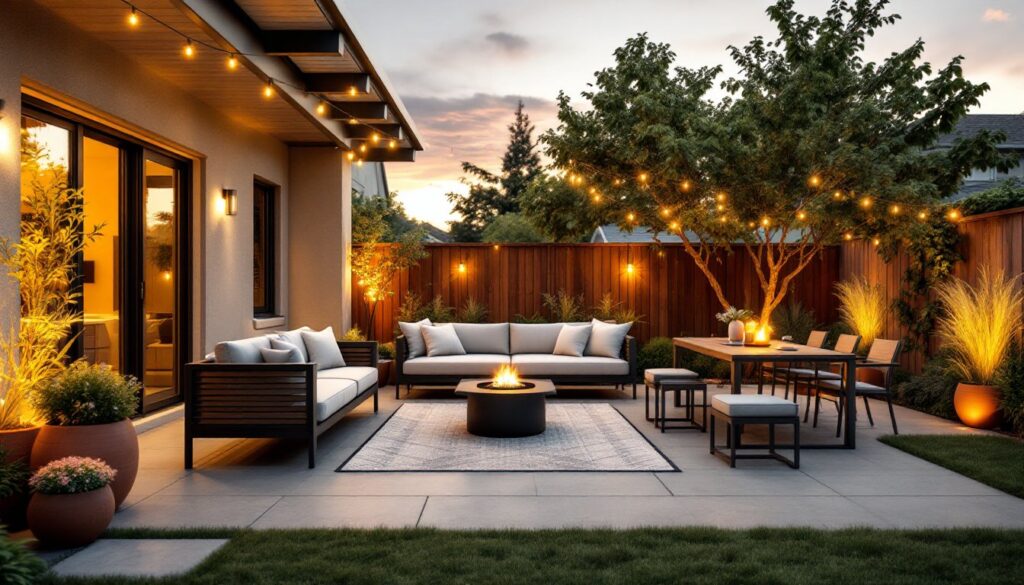

Building a backyard patio doesn’t mean emptying your wallet. Whether you’re working with a compact courtyard or sprawling acreage, today’s best backyard outdoor patio ideas balance style, durability, and realistic budgets. The difference between a backyard that sits empty and one that becomes your family’s favorite gathering spot often comes down to smart material choices, thoughtful layout, and execution over expense. This guide walks you through seven proven design approaches, from sleek contemporary builds to rustic retreats, so you can create an outdoor living space that feels like an intentional extension of your home.
Table of Contents
ToggleKey Takeaways
- Backyard outdoor patio ideas succeed when balancing material choices, thoughtful layout, and realistic budgets over expensive complexity.
- Observe your backyard’s sun patterns, wind flow, and movement at different times before choosing your patio style and layout to save money and frustration.
- Proper foundation prep—4 to 6 inches of compacted gravel and sand—prevents settling and drainage issues that would ruin your patio in two seasons.
- Shade transforms an unused patio into a functional outdoor living space, with options ranging from trees and pergolas to shade sails and umbrellas at various price points.
- Outdoor lighting with warm color temperature (2700K) and dimmers extends your patio’s usability after sunset and creates inviting ambiance.
- Invest in quality furniture and outdoor rugs with proper weather resistance rather than cheap options that deteriorate quickly and waste money.
Choose Your Patio Style and Layout
Before ordering materials, decide what environment you want to inhabit. Your patio’s layout and style anchor every other choice, from flooring to furnishings. Spend time in your backyard at different times of day and seasons. Notice where the sun hits hardest, where wind channels through, and how you naturally move through the space. This observation phase saves money and frustration later.
Contemporary and Modern Patios
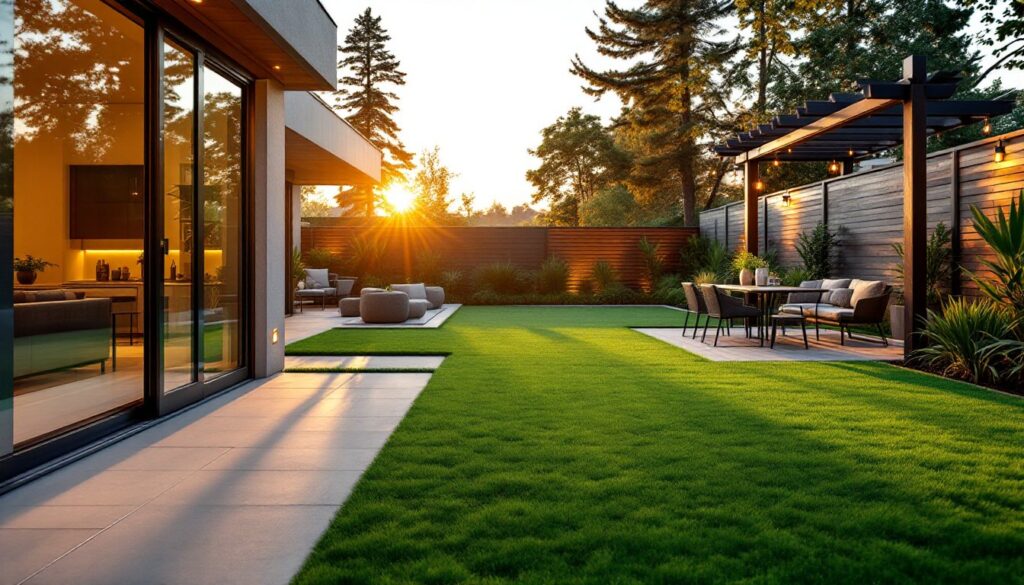
Contemporary patios lean clean and minimalist. Think straight lines, neutral palettes (grays, tans, blacks), and strategic use of wood or composite decking. A typical layout features a simple rectangular or L-shaped footprint with clear zones: dining area, lounge space, and perhaps a small fire feature. Contemporary works especially well on smaller lots because it avoids fussy details and visual clutter.
Material-wise, a stamped concrete pad with a natural finish costs less than pavers but delivers sharp lines. Pair it with a single shade structure, a pergola or modern umbrella, and you’ve got sophistication without complexity. Landscaping projects that emphasize architectural plants (ornamental grasses, columnar evergreens) rather than flower beds reinforce the modern vibe while keeping maintenance low.
Rustic and Mediterranean Designs
Rustic and Mediterranean styles embrace warmth, texture, and lived-in character. Think clay-colored pavers, weathered wood, terra cotta planters, and curved edges. These designs handle shade trees beautifully, a shade tree for patio becomes a focal point rather than afterthought.
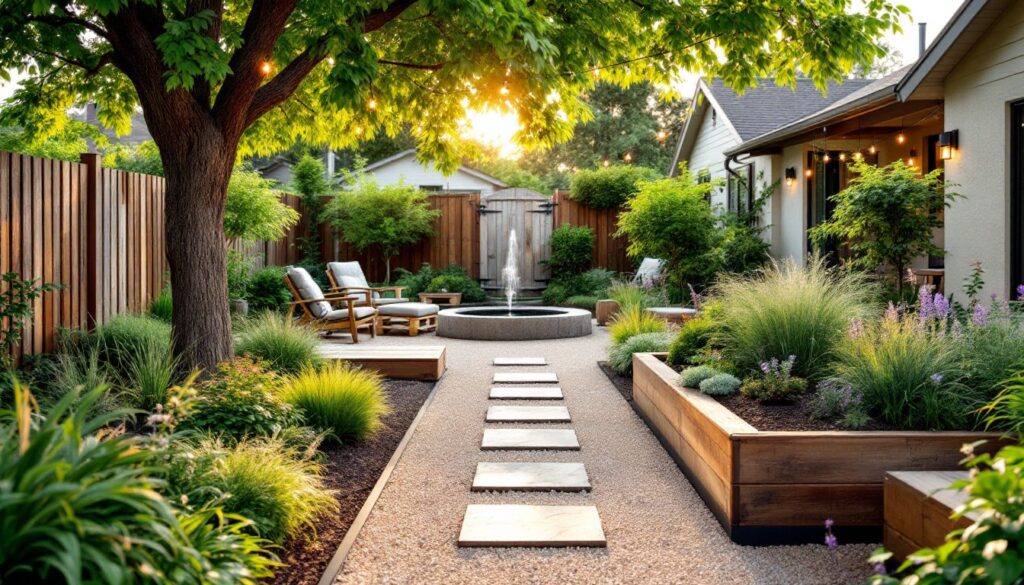
The beauty of rustic layouts is their forgivingness. Imperfect lines feel intentional. Mismatched stone textures add charm. Mediterranean patios often include a central gathering point, a built-in bench, a fire table, or a stone-rimmed water feature, that draws people together. Start with a curved edging and let the layout breathe. This style actually saves money because you’re not hunting for perfectly matched materials: you’re selecting reclaimed or salvage pieces that tell a story.
Select the Right Materials and Flooring
Your flooring is the foundation, literally. Cheap flooring that fails in two years costs more than quality material upfront. Understand the difference between concrete, pavers, natural stone, and composite options.
Concrete is affordable ($6–$12 per square foot installed) and durable. Stamped, stained, or scored concrete offers design flexibility. Downside: it cracks in freeze-thaw cycles and stains easily unless sealed annually. Best for warm climates or sheltered areas.
Clay or concrete pavers ($8–$16 per square foot) allow for pattern work and are easier to replace individually if damaged. They settle evenly over a proper sand base, making repairs simple. Outdoor rugs on deck soften hard surfaces and define seating zones without replacing flooring.
Natural stone (flagstone, limestone, granite) runs $15–$30+ per square foot. It’s beautiful and long-lasting but slippery when wet and requires professional installation. Reserve it for high-visibility areas or combine with less expensive pavers to stretch budget.
Composite or permeable pavers offer sustainability and good looks ($12–$20+ per square foot) but cost more upfront. Composite materials won’t rot and rarely need replacement, a long-term savings.
Regardless of material, proper prep is non-negotiable. The base layer (4–6 inches of compacted gravel and sand) prevents settling and drainage issues. Spend time here: rushing it guarantees a lumpy, cracking patio in two seasons. Slopes should shed water at roughly 1/8 inch per foot away from structures.
Create Shade and Shelter Solutions
Shade transforms a patio from uncomfortable heat trap to usable outdoor room. Without it, your patio sits empty on summer days. Options range from living shade (trees) to structures (pergolas, shade sails, umbrellas).
Trees provide the softest, most natural cooling. Deciduous trees offer summer shade and winter sun: evergreens give year-round privacy. Trees take years to mature, so if you’re building now, plan for interim shade. Fast-growing ornamental trees mature in 5–10 years: large shade trees take 15–20 but deliver serious cooling and property value.
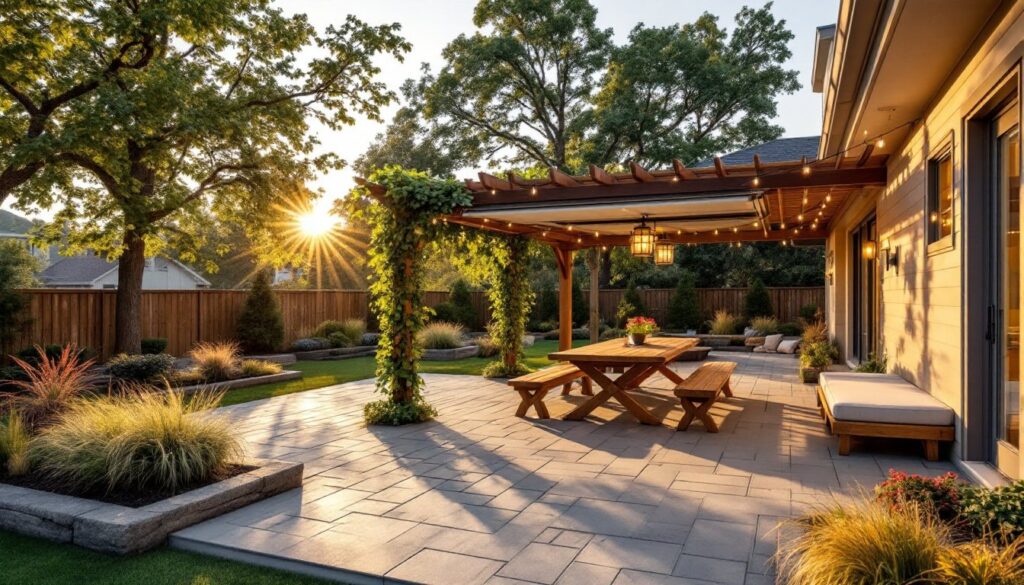
Pergolas ($1,500–$4,000 installed, depending on size and materials) offer partial shade while allowing airflow. Open-frame designs look less heavy than solid roofs. Add retractable shade cloth for adjustable coverage, or train climbing vines (clematis, jasmine) for living color that matures over seasons.
Shade sails ($500–$2,000) are modern, adjustable, and quick to install. They’re excellent for renters or those testing patio layouts before committing. Position them northwest-facing for afternoon relief.
Market umbrellas ($100–$400) work for smaller spaces. Offset umbrellas stay out of sight lines better than center-pole models. Quality matters, cheap umbrellas blow over or fade: mid-range aluminum frames with Sunbrella® fabric last 5–7 years.
Consider multi-season backyard design if you live in variable climates. Retractable awnings extend seasons and protect furniture from rain and excessive UV. They’re pricey ($2,000–$5,000+) but turn your patio into a true room.
Add Lighting and Ambiance
Lighting determines whether your patio gets used after sunset. Poor lighting feels unsafe and uninviting: good lighting creates atmosphere and extends your outdoor day by hours.
Overhead options include recessed lights (built into soffits or pergolas), pendant fixtures hung from structures, or string lights strung overhead. Warm color temperature (2700K) feels cozy: avoid harsh white (5000K+) unless you need work lighting.
Low-voltage LED path lights ($15–$40 each) line walkways and define edges without requiring hardwired installation. Solar versions eliminate wiring but require direct sun and need replacement every 3–4 years.
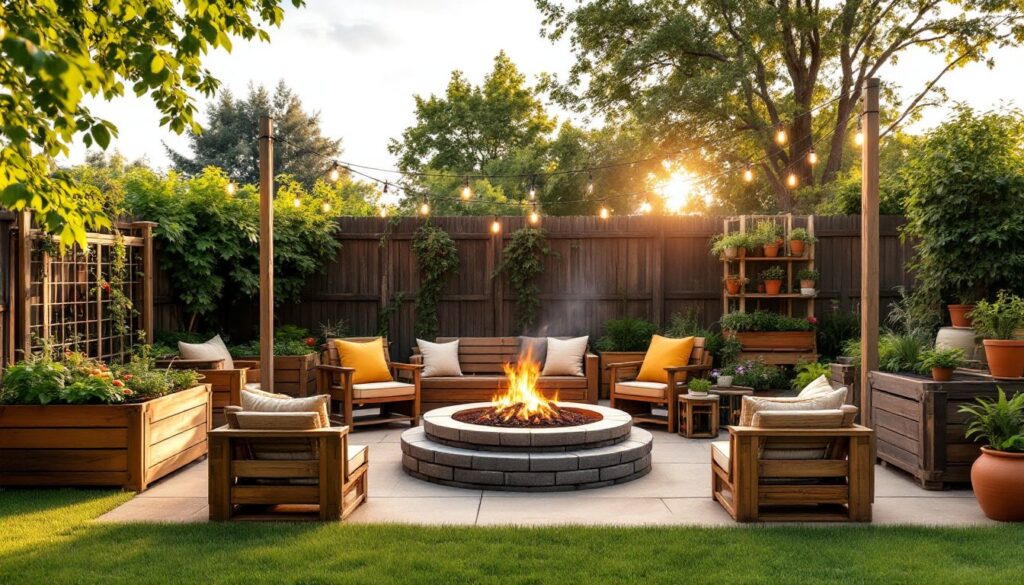
Accent lighting highlights architectural features, plants, or water elements. Uplighting on trees creates drama: step lights on stairs improve safety. A single fire table or fire pit adds warmth and becomes a gathering point, fire creates its own ambiance and costs under $300 for a decent tabletop model.
String lights (bistro or Edison-style) deliver festive warmth. Solar reels ($50–$150) avoid extension cords. Traditional electric versions need an outlet or professional wiring but burn brighter and more reliably.
Wire outdoor circuits on a separate breaker and use GFCI (ground-fault circuit interrupter) outlets. Bulbs should be rated for outdoor use and damp locations. Install dimmers where possible, they let you adjust ambiance and save energy. Lighting designed during daytime often looks wrong at night, so test setups before committing to permanent installation.
Furnish and Decorate Your Patio
Furniture is where your patio becomes livable. Quality outdoor pieces resist weather and last years: cheap furniture deteriorates in one season and wastes money.
Seating options: Teak or tropical hardwood benches ($300–$800) are durable and age beautifully. Powder-coated aluminum frames with solution-dyed acrylic cushions ($400–$1,200 per seating group) resist fading and are lightweight. Rattan or wicker requires a covered area to prevent water damage. Rooms to go outdoor furniture provides modular flexibility, allowing you to expand or reconfigure as your space evolves.
Dining: A simple wood picnic-style table ($200–$500) works for casual family dinners. Concrete or metal-frame tables integrate with contemporary designs. Always measure your patio footprint and account for chair pullback, a six-person table needs roughly 12 × 12 feet of clear space.
Softening hard surfaces: An outdoor carpet zone anchors seating groups and reduces echoes on hard patios. Outdoor rugs ($100–$400) withstand moisture if indoor-outdoor grades are chosen: synthetic fibers resist mildew better than natural jute. Layer rugs visually to define zones in open layouts.
Planting and decoration: Potted plants add color without planting beds. Large containers ($30–$80 each) filled with seasonal flowers or structural grasses soften edges and guide movement. Wall-mounted planters, hanging baskets, and climbing vines on trellises add greenery without eating square footage.
Accessories (outdoor pillows, throws, lanterns) make patios inviting but aren’t essentials, start with solid furniture and shade, then add personality incrementally. Stores like Wayfair, Overstock, and local garden centers carry quality options at various price points. Research material care requirements before buying: some finishes demand annual sealing, while others are nearly maintenance-free.