
Texas homeowners face a unique set of challenges: scorching summers, unpredictable droughts, and soil that doesn’t always cooperate. But those same constraints, heat, sun exposure, and water scarcity, push people toward creative, resilient outdoor spaces. Whether you’re working with a sprawling Hill Country lot or a modest suburban yard, there’s plenty of room to build a backyard that looks great and stands up to the Texas climate. This guide covers 10 practical ideas tailored to Texas living, from drought-smart landscaping to functional outdoor rooms that keep you cool and comfortable year-round.
Table of Contents
ToggleKey Takeaways
- Backyard ideas for Texas should prioritize drought-resistant native plants and xeriscaping to reduce water bills while maintaining visual appeal and supporting local pollinators.
- Shade structures like pergolas and covered patios positioned on the west and south sides, combined with fans or misting systems, are essential to create comfortable outdoor living spaces during hot Texas summers.
- Smart hardscaping choices—including light-colored permeable materials like travertine and decomposed granite—keep your backyard cooler while managing rainwater and reducing erosion.
- Water features such as fountains, splash pools, and rain gardens offer cooling and ambiance without the excessive water consumption and maintenance demands of traditional swimming pools.
- Layered outdoor lighting with string lights, path lights, and warm-toned LEDs extends your backyard’s usability year-round while improving safety and creating a welcoming atmosphere.
- Composite decking and strategic material selection (avoiding dark surfaces) combined with proper drainage and retaining wall installation create durable, heat-resistant backyard structures suited to Texas climate demands.
Drought-Resistant Landscaping Solutions
Water bills in Texas can spike quickly, and most of the state sits in regions prone to dry spells. Drought-resistant landscaping isn’t a limitation, it’s an opportunity to work with native plants that actually thrive in local conditions.
Native Texas Plants and Xeriscaping
Xeriscaping (pronounced “ZER-o-scape”) means designing landscapes to reduce water use without sacrificing aesthetics. Start by replacing thirsty ornamental grasses and shrubs with native species. Texas privet, flame acanthus, rosemary, and desert rose require far less water once established and attract native pollinators.
The key is grouping plants by water needs. High-water plants (if you must have them) go near irrigation points: drought-tolerant species fill the rest. Most native plants need regular water for the first season to develop deep roots, then survive on rainfall alone.
Some homeowners worry that native plants look “plain.” Reality check: a well-maintained native plant landscape delivers visual variety through texture, seasonal color changes, and wildlife activity. Decomposed granite or river rock mulch keeps soil cool, reduces evaporation, and costs less than traditional bark. A 2–3 inch layer works best.
Building codes don’t typically restrict xeriscaping, but HOAs sometimes have landscaping rules. Check your covenants before removing established plants. If you’re converting a lawn, don’t just rip it out and plant randomly. Backyard landscaping designs that succeed start with a plan: sketch your layout, identify sun and shade zones, and select plants accordingly.
Outdoor Living Spaces for Hot Climates
A patio or deck is useless if you’re too hot to sit there. In Texas, shade structures separate backyard hangouts from sunbaked wastelands. Build functionality first, aesthetics second.
Shade Structures and Covered Patios
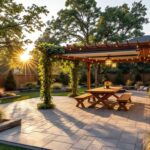
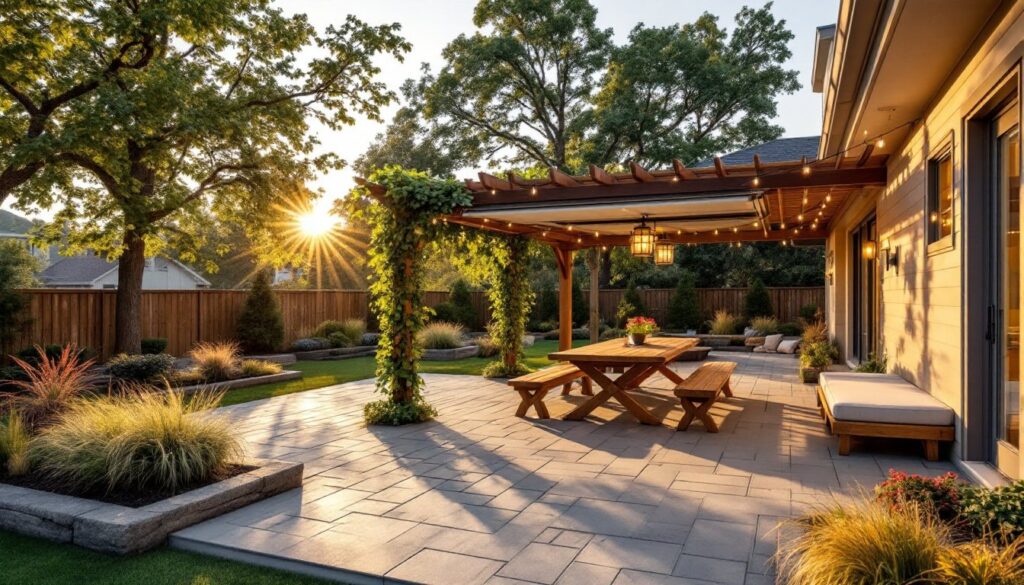
A pergola or shade sail gives you flexibility: partial shade for cooler afternoons, open sky for evening gatherings. Aluminum or vinyl pergolas resist rot and sun damage better than wood, though they cost more upfront. If you go wood, use pressure-treated or naturally rot-resistant species (cedar, composite decking). Paint or stain adds life and appearance: clear finishes show damage faster.
Covered patios demand more structure. A roof or polycarbonate panel overhead blocks direct sun and even light rain. If a permanent structure is overkill, a retractable shade system ($1,500–$4,000 installed) opens and closes with a motor or crank.
Locate shade structures on the west and south sides of your yard, where afternoon sun peaks. Orientation matters: an east–west pergola blocks more sun than a north–south one. Concrete or composite decking under a covered patio stays cooler than stone in direct sun, darker colors absorb heat, so light grays or taupes are smarter in Texas.
If your patio backs onto the house, check local building codes for setbacks and roof height. Most jurisdictions require a permit for roofed structures over 200 square feet or free-standing structures taller than 15 feet. Backyard patio ideas often incorporate fans or misting systems to drop temperatures another 10–15°F. A ceiling fan rated for outdoor use or a portable misting system ($200–$800) extends your usable hours into the hottest months.
Water Features and Pool Alternatives
Swimming pools consume massive amounts of water and energy, not ideal in a drought-prone state. But Texans still crave water features for cooling and ambiance. The smart option is thinking smaller and smarter.
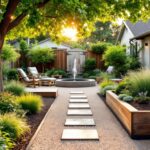
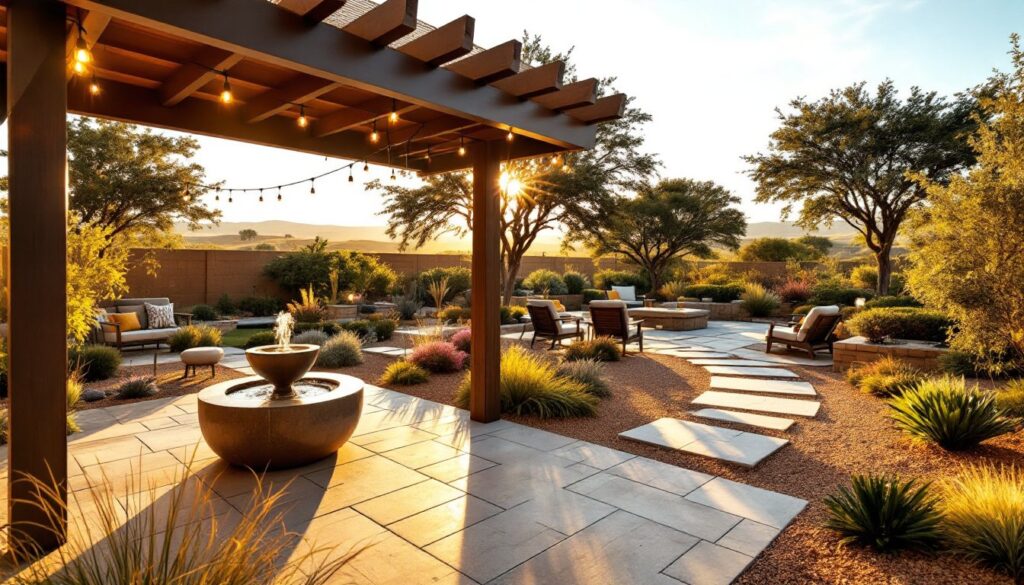
Fountains and water features (birdbaths, bubbler bowls, small recirculating fountains) add sound and movement without the commitment. A simple basin fountain uses just a few hundred gallons per year: the water recirculates, not drained. Electric pumps cost under $100: installation is DIY-friendly. Place fountains in shaded areas to slow evaporation.
Shallow soaking pools or “splash pools” designed for cooling rather than swimming use 30–50% less water than traditional pools. Depths of 2–3 feet work for wading and sitting on submerged benches. They’re easier to maintain, cheaper to install, and many homeowners find them more practical for Texas summers.
For something minimal, a catchment basin or rain garden collects runoff and doubles as a low-maintenance water feature. Native plants surround the basin: water percolates into the soil, reducing your irrigation needs. These also support local ecosystems, birds and insects thrive in them.
If you absolutely must have a pool, use a dark solar cover when not in use to cut evaporation in half, and install a variable-speed pump that runs at lower speeds, cutting energy costs by 70–80%. Check city and county codes: some areas restrict pool installations during droughts or require proof of water treatment systems. Some municipalities also offer multi-season backyard design guidance for water conservation.
Hardscaping and Decking Ideas
Hardscape (patios, pathways, retaining walls, edging) absorbs and radiates heat, crucial in Texas. Choose materials and colors strategically. Limestone, flagstone, and travertine stay cooler than concrete or asphalt because they’re porous and lighter in color. They also complement Hill Country aesthetics naturally. A travertine patio costs $8–$15 per square foot installed: it’s worth it if you’re in an area where it fits the local style.
Permeable paving (porous pavers, gravel, decomposed granite) lets rainwater drain into the soil instead of pooling or running off. This reduces flooding risk, recharges groundwater, and qualifies for some municipal stormwater discounts.
For decking, composite materials (wood-plastic blends) resist rot, splinters, and sun damage better than pressure-treated lumber, though they’re pricier ($10–$20 per square foot vs. $3–$8 for treated wood). If you choose wood, sand and stain every 2–3 years in Texas’s intense sun. Avoid black or dark decking in direct sun, they become painfully hot on bare feet.
Retaining walls prevent erosion on sloped yards and create level planting areas. Stacked stone or modular concrete blocks work well: install a drainage layer (gravel and perforated pipe) behind any retaining wall taller than 2 feet to prevent water pressure buildup. If the wall is over 4 feet tall or supports a structure, consult an engineer or hire a contractor. Building permits usually apply to walls over 3–4 feet.
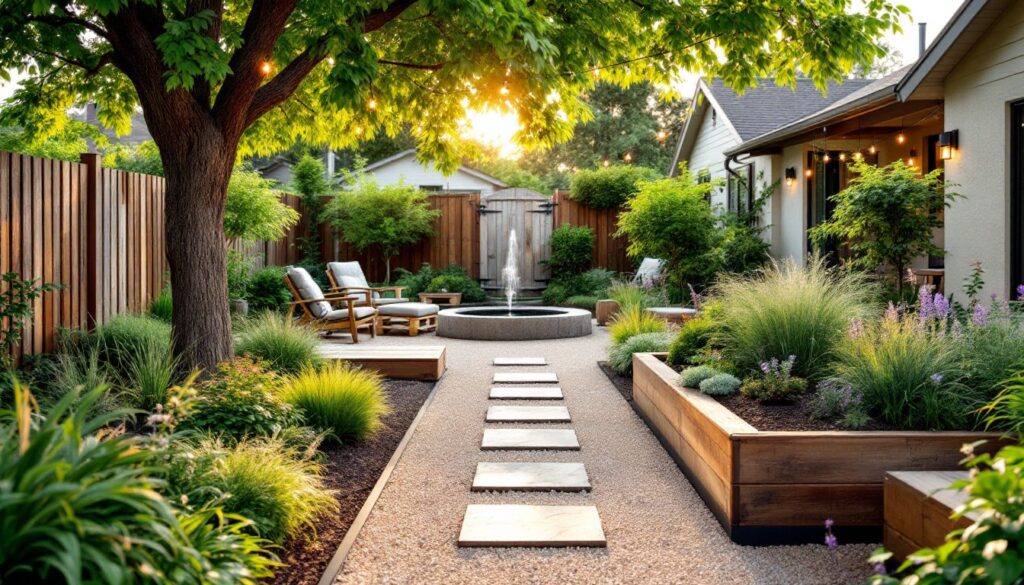
Pathways tie spaces together. Stepping stones through planted areas reduce foot traffic damage and water loss. DIY backyard projects often include simple stone pathways, lay them out with string, dig a shallow trench, add sand as a base, and set stones level. That’s a weekend job for most yards.
Lighting and Ambiance for Year-Round Enjoyment
Texas evenings cool down fast, especially in spring and fall. Good lighting extends your backyard season and boosts safety. Skip harsh overhead fixtures: layer lights instead.
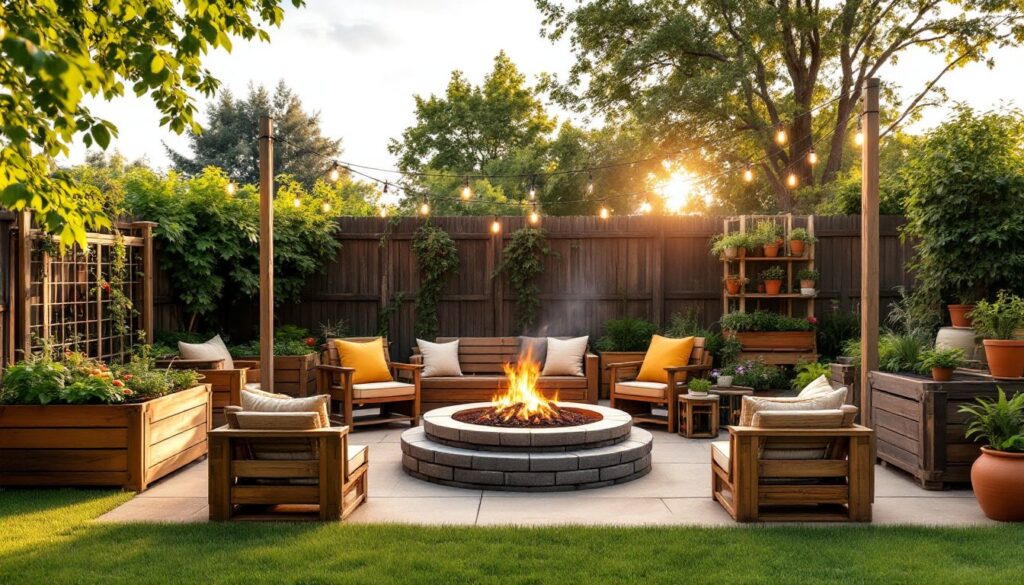
String lights (Edison-style or bistro lights) create warmth and are affordable ($50–$200 for a 20-foot span). They’re low-voltage, so DIY installation is straightforward, run a cord along a pergola or fence. Solar string lights eliminate wiring but fade faster as batteries age.
Path lights and step lights prevent trips and guide people safely. LED path lights use almost no power: solar versions need 6+ hours of sun daily to function. Bury cable in conduit along pathways to avoid damage.
Uplighting (lights hidden at ground level pointing upward) highlights specimen plants or trees at night, adds drama without much cost. Spotlights on rock formations or architectural features create focal points. Warm white LEDs (2700K color temperature) feel cozier than cool white (4000K+).
Smart outdoor lights let you adjust brightness and color from your phone. They cost more upfront ($30–$80 per bulb) but offer flexibility. A dimmer switch on a patio fixture gives you control without smart bulbs.
Most outdoor lighting is 12-volt low-voltage, which is safer and easier to install than 120-volt line voltage. A transformer steps down household current: run the low-voltage cable along the ground or buried in conduit. It’s a DIY-friendly project if you’re comfortable with basic wiring. If not, a licensed electrician can install it in a few hours ($300–$600).
For security, motion-sensor lights near entries and dark corners deter intruders and light up unexpectedly when someone passes. Pair them with warm light to keep the friendly, welcoming feel. Some homeowners use backyard makeover ideas that combine ambient lighting with task lighting, accent lights for ambiance, brighter spotlights for grilling or outdoor dining.